
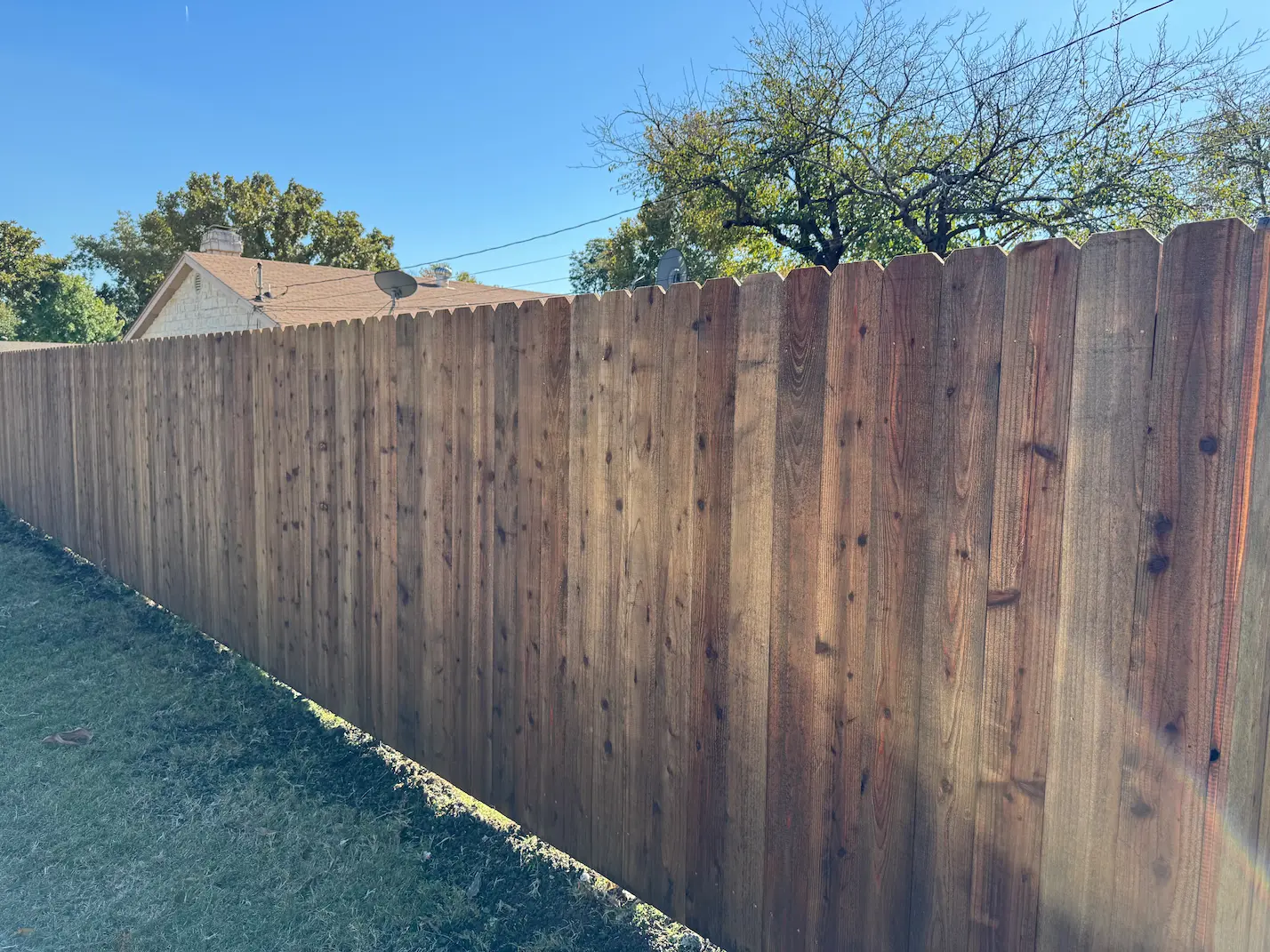
What Trex Composite Fencing Actually Is
Trex is not a plastic fence pretending to be wood. It is a composite board molded from roughly 95% recycled content, mostly reclaimed wood fiber and polyethylene film, pressed into pickets and rails that mount to a steel or aluminum frame. You get the profile and shadow lines of a real board-on-board wood fence with none of the rot clock ticking behind it.
That distinction matters in Dallas. Cedar is beautiful the day it goes up and starts losing that fight almost immediately against our sun, our humidity swings, and our clay. Trex sidesteps the whole cycle. There is no grain to raise, no board to cup, no picket to gray out. A rinse with the garden hose is the entire maintenance program.
As certified Trex installers, we build it the way the system is engineered to be built: posts in properly sized footings, rails locked into the framing, pickets seated so the wall stays flat and gap-free through a 40-degree temperature swing. Done right, it is one of the few fences you install once and stop thinking about.
- Zero refinishing — no sanding, staining, sealing, or painting, ever.
- Full privacy — interlocking pickets close tight with no shrink gaps.
- Won't rot or feed termites — composite gives insects and fungus nothing to eat.
- Recycled by design — about 95% reclaimed wood and plastic, diverted from landfills.
If you want the honest cedar-versus-composite conversation before you commit, our wood fence installation page lays out the other side, and we are happy to walk you through both. Cedar looks great on day one, but Trex pulls ahead over the life of the fence once you factor in the staining, repairs, and mid-life replacement cedar demands in North Texas — and the dozen-plus weekends you never spend refinishing.