
Skip to content
Dallas Fence Company
Ornamental iron fence installation in Dallas, TX
Ornamental Iron Experts

Iron Fence Installation in Dallas, TX

Iron fence installation in Dallas, TX — powder-coated wrought iron and tubular steel built for clay soil and Texas sun. Free estimate: (469) 809-2424.


Iron Fence Installation

01

Iron Fencing Built for Dallas

An iron fence does two jobs at once: it locks down your property and makes the whole place look more established. Nothing else in fencing pulls that off. Wood rots. Chain-link reads flimsy. Iron reads permanent — which is why you see it fronting the best blocks in Highland Park and Preston Hollow.

We build powder-coated iron and tubular steel fencing across Dallas — ornamental steel, true wrought iron, driveway and estate gates, pool-code barriers, plus repairs and section matching — and we back the workmanship with a 5-year warranty. Not panels dropped in from a warehouse. Fencing engineered for your grade, your soil, and your setback rules, then finished to survive a Texas summer.

One honest note up front: the word "iron" is doing a lot of lifting. Real hand-forged wrought iron is rare now, so what almost every Dallas home actually gets is hollow tubular steel that looks the part at a fraction of the weight. More on that choice below.

02

Wrought Iron vs. Tubular Steel

This is the choice that decides how your fence looks, lasts, and holds up in Dallas.

True wrought iron

Solid iron bar, hand-forged and welded. The heaviest, strongest, most authentic option — and the most demanding to fabricate and maintain. It needs more upkeep too, since solid iron rusts if the finish fails and has more surface to maintain. Worth it for: historic-home restorations, genuine estate ironwork, and anyone who wants true hand-forged detail.

Tubular steel (ornamental steel)

Hollow galvanized steel tube, powder-coated. Lighter, lower-maintenance, and in Dallas it actually resists rust better than solid iron because the galvanizing plus powder coat seals it end to end. Same classic look — spear tops, flat tops, finials — at a fraction of the weight. Worth it for: almost every home and business in Dallas. This is what we install most.

Quick comparison

  • Strength — Wrought iron: maximum. Tubular steel: high, plenty for security.
  • Rust resistance — Wrought iron: needs diligent upkeep. Tubular steel: superior when galvanized and powder-coated.
  • Upkeep — Wrought iron: more maintenance over its life. Tubular steel: lower maintenance, sealed end to end.
  • Weight — Wrought iron: heavy, harder to install. Tubular steel: lighter, faster to set.
  • Look — Both deliver the classic aesthetic; only trained eyes tell them apart from the curb.

Want a rust-proof metal fence with zero finish maintenance and don't need iron's mass? Aluminum fencing is the third option — lighter and maintenance-free, ideal for pool areas.

04

Powder Coating vs. Paint in the Texas Sun

This is where Dallas installs live or die, and where corner-cut jobs give themselves away in two summers.

Dallas UV is punishing. A metal fence bakes for months a year, and the finish is what stands between your steel and rust. The two ways to finish iron are not close.

Paint is a liquid coat brushed or sprayed on. Under Texas sun it fades, chalks, and cracks. Once it cracks, water gets under it and rust spreads beneath a finish that still looks fine from the street — until it doesn't. Repainting becomes a recurring chore.

Powder coating is a dry polymer bonded to the steel and oven-cured into a hard shell. It holds color far longer under UV, resists chips, and doesn't peel. That's why we powder-coat: here it's the difference between a fence that looks sharp in year fifteen and one that's streaking rust by year three.

Two details separate a fence that lasts from one that fails early:

  • Galvanize first, then powder-coat. Zinc under the powder means that even if the top layer gets nicked, the steel underneath is still protected. Powder over bare steel is a countdown to rust.
  • Seal the cut ends and welds. Rust almost always starts at a raw cut or an unsealed weld, not the middle of a picket. Proper prep there is what makes a finish last.

Our powder-coat finish is warranted against peeling, cracking, and fading. Ask any bidder how they finish their steel. If the answer is "we paint it," you now know how that fence ages.

05

Footings, Clay Soil, and Why Setup Matters Here

Dallas sits on expansive clay. It swells when it rains and shrinks in a drought — the same ground that cracks foundations and heaves driveways, and it will shove a poorly set fence out of plumb within a couple of seasons.

An iron fence is rigid. It has no give. If the posts aren't set to handle that movement, you get leaning sections, gates that scrape and won't latch, and gaps opening at the rails. The fabric of the fence is rarely the problem here. The footing is.

How we set posts for Dallas clay:

  • Dig deep enough to matter. Shallow footings ride the top layer of clay — the layer that moves most. Posts reach below that active zone, and depth scales with height: a 6-foot fence needs a deeper, wider hole than a 4-foot one.
  • Concrete the posts, sized to the load. A proper concrete collar anchors the post and spreads the load. Gate posts get oversized footings because a swinging gate multiplies the stress on them.
  • Crown the concrete to shed water. We slope each footing away from the post so water runs off instead of pooling — pooled water at the post line is where clay heave and base rust both begin.
  • Account for slope and drainage. Dallas yards rarely sit flat. We rack or step panels to follow grade cleanly instead of leaving gaps under the fence.

This is the invisible part of the job — buried where no bid photo shows it, and the part that decides whether your fence is still straight in ten years. A fence is only as good as what's holding it up.

06

HOA Rules, Front Yards, and Pool Code

Iron is often the only fence a Dallas HOA will approve for a front yard, precisely because it's open and doesn't wall off the street. But open doesn't mean anything goes.

Front yards and HOA approval

The premier neighborhoods have real standards. Highland Park and University Park both regulate front-yard fencing tightly — expect height limits, open-picket requirements, and often a mandated finish color. Preston Hollow has HOA sections with their own architectural rules on top of city code, and out in Plano and the suburbs, height caps and setback rules are common.

The pattern to remember: open ornamental iron is usually welcome in a front yard; tall solid barriers usually are not. Confirm your HOA's guidelines and pull the required city permit before we fabricate anything. We build to whatever height and finish your rules allow — ordering steel before you've checked is how a fence ends up torn out.

Pool barriers

If your iron fence encloses a pool, it's a life-safety barrier and has to pass code. Texas pool-barrier rules generally require:

  • A barrier at least 48 inches tall
  • No gap wider than 4 inches between pickets (flat-top is popular here — no points at kid height)
  • A self-closing, self-latching gate with the latch mounted out of a child's reach

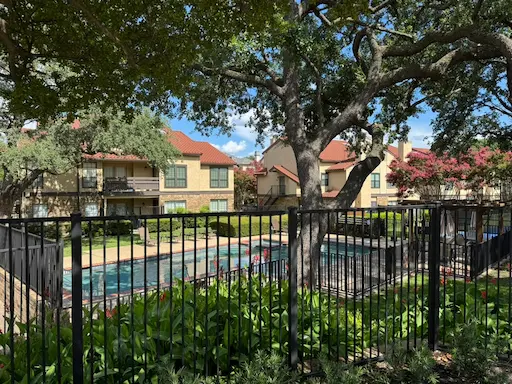
Iron is a natural fit: it hits the height and spacing spec while keeping the water visible from the house. We size and gate it to pass inspection. Full detail is on our pool fence installation page.

07

What Your Iron Fence Quote Should Itemize

Iron bids are hard to compare because two contractors can quote the "same" fence and build wildly different things. Here's what a real quote spells out — use it to see what you're actually getting.

  • Steel gauge and type. Tubular steel or solid iron, and what wall thickness. Heavier gauge lasts longer; a vague quote hides a thin-wall fence.
  • Finish process, in order. Galvanized then powder-coated is the standard that holds up. "Painted" or an unspecified finish is a red flag in this sun.
  • Post depth and footing. How deep posts go, and that they're set in concrete — the clay-soil line item that separates a lasting fence from a leaning one.
  • Picket spacing. Matters for pets and pool code. Confirm the number.
  • Gates, spelled out. Walk gates and drive gates listed separately with hardware; automation itemized.
  • Line length. Total linear feet, so you can confirm the full scope of the run being quoted.
  • Warranty, in writing. Ours is 5 years on workmanship plus finish coverage against peeling, cracking, and fading.

If a bid is one lump-sum number with no breakdown, ask for this. A bid that looks light on the page is often light because it's thinner steel, shallower posts, and a finish that won't last — you just can't see it until it fails.

08

Repair or Replace? How to Decide

Not every damaged iron fence needs to come out. Iron's big advantage is that it's fixable — a good frame can outlive several finishes and a few repairs. The trick is knowing which side of the line you're on.

Repair usually makes sense when:

  • The damage is local — a bent picket, a dinged rail, one leaning section.
  • Rust is on the surface only and hasn't eaten through the steel.
  • A gate sags, drags, or won't latch — often a hinge, footing, or alignment fix, not a new fence.
  • The finish is chalking or fading but the frame is solid — that's a refinish, not a replacement.

Replacement usually makes sense when:

  • Posts are rusted through at the base — the ground line is where iron dies, and once the anchor is gone the fence is structurally done.
  • Most of the run is failing at once, so patching stops being worth it versus starting clean.
  • The old fence was set in bad footings and keeps shifting no matter how many times it's straightened.

We'll tell you which it is honestly. If a repair gets you another decade, we'll do the repair — it's the practical answer for you. When the steel is genuinely done, we'll say so and spec a replacement built to outlast the last one.

Ready to talk specifics? We'll measure, check your grade and property line, walk your HOA and pool-code requirements, and hand you a clear, itemized spec. Call (469) 809-2424 or get a free estimate.

Where we work

Iron Fence Installation across the DFW metroplex

We install in Dallas and every surrounding suburb. A few of the cities we serve most — don't see yours? Just ask .

More from Dallas Fence

Explore our other fence services

One crew for every fence on your property. Whatever you're building next, we install it.

Frequently asked questions

Common questions about iron fence installation in the Dallas area.

Traditional wrought iron is solid and hand-forged; modern 'iron' fencing is usually hollow tubular steel, galvanized and powder-coated. Tubular steel is lighter, resists rust better, and is what most Dallas homes get today.
A galvanized, powder-coated steel fence resists rust for decades. Rust starts at chips, cut ends, and weld points, so touch up nicks early and rinse the fence a couple of times a year.
Usually yes. Highland Park, University Park, and Preston Hollow allow open ornamental iron in front yards but cap height and often require a set finish color. Check your HOA and city permit before ordering.
Yes, if it meets Texas pool-barrier code: at least 48 inches tall, no more than 4 inches between pickets, and a self-closing, self-latching gate. See our pool fence page for the full spec.
A properly installed, powder-coated steel fence lasts 40 to 60-plus years in Dallas. The finish is the wear item, not the steel; keep it sealed and the frame outlives most homeowners.
Repair when the frame is sound and damage is local — a bent section, a sagging gate, surface rust. Replace when posts are rusted through at the base or most of the run is failing.
Yes. We match picket spacing, finial style, rail count, and color so new sections or gates blend with existing fencing and railings instead of clashing.

Ready for your iron fence installation project?

Free on-site estimate, no pressure. Licensed, insured, and backed by our 5-year workmanship warranty.