
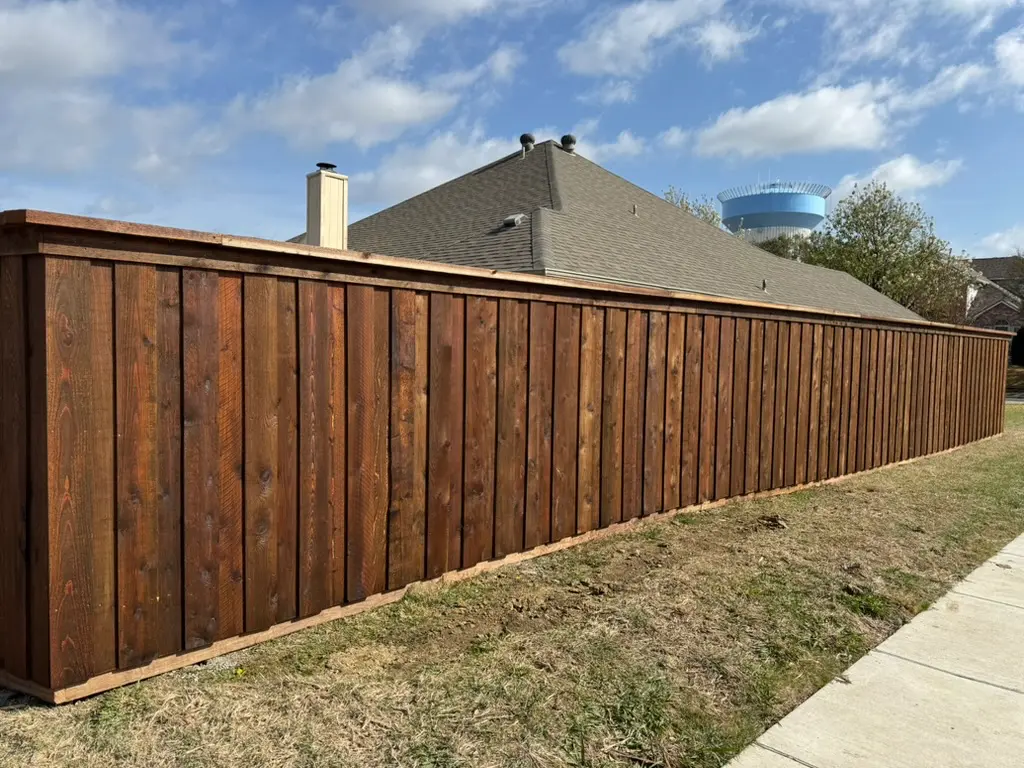
Fencing Built for Lakewood's Architecture
The housing stock around Lakewood Heights, Lower Lakewood, and the Tokalon Park area leans heavily on Tudor Revival and Colonial Revival—steep gables, brick and stone, arched doorways, and a lot of architectural character worth protecting. The wrong fence flattens all of that. A flimsy stockade panel in front of a storybook Tudor looks exactly as off as it sounds.
Two materials do the heavy lifting in Lakewood:
- Western Red Cedar for backyards and side yards. Board-on-board cedar gives you a solid, warm privacy line that ages into the neighborhood instead of shouting for attention. It is the standard we spec for Lakewood's older homes.
- Wrought iron for front yards and street-facing runs. Black iron—or an iron-and-cedar combination—reads correctly against brick and stone, keeps sightlines open the way the conservation guidelines prefer, and holds up for decades.
We set cap and trim, picket spacing, and post caps to match the era of the house. On the Colonial Revival homes down toward Lower Lakewood, cleaner iron pickets tend to fit. On the heavier Tudors up in Lakewood Heights, a mix of cedar and iron often looks the most at home. That judgment is the difference between a fence that disappears into the property and one that fights it.
Every fence we build stands on galvanized-steel posts. Cedar posts rot from the ground up—and in a neighborhood where you may be fitting a fence between hundred-year-old landscaping, you do not want to be back digging out failed posts in five years. Steel posts stay plumb and carry the workmanship warranty.