
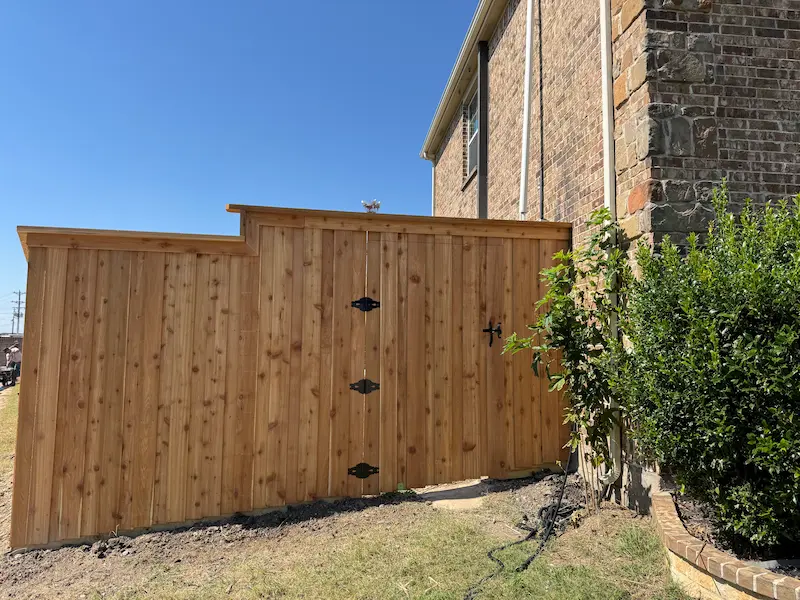
Fencing a Historic Home in Old East Dallas
The housing stock here sets the whole job. These are deep, narrow city lots with detached rear garages, alley access, and front porches that sit close to the sidewalk. Mature pecans and live oaks shade most yards, and root systems near the property line change where and how a post can go in.
A fence that works on a new build in the suburbs looks wrong on Swiss Avenue. Too tall, too solid, or the wrong material and it fights the house instead of framing it. The homes in Munger Place and Junius Heights were designed to face the street with open front yards. Slap a six-foot privacy wall across the front and you've broken the whole rhythm of the block — and on a designated street, you won't get it approved anyway.
We start by reading the house. A Craftsman bungalow wants a low cedar picket or an open iron fence with square posts. A Prairie home wants clean horizontal lines and heavier proportions. A Tudor wants something a little more formal. Then we fit that to your lot, your trees, and your district's rules.